



News by Topics - Michigan
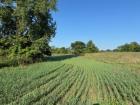
GLRI Soil Health Investment Program Promotes Farmer Collaboration to Reduce Nutrient Runoff
The Soil Health Investment Program, created by the Michigan Department of Environment, Great Lakes, and Energy with Great Lakes Restoration Initiative funding, is supporting farmers in adopting conservation practices. More than 60 farms are currently enrolled in the program.August 12, 2026
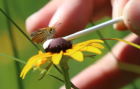
GLRI Helps a Rare Butterfly Gain New Ground
Thanks in part to Great Lakes Restoration Initiative funding, the U.S. Fish and Wildlife Service and their partners are taking a significant step giving the Poweshiek skipperling a renewed chance at survival.August 10, 2026
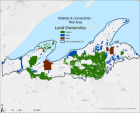
Forest Service Opens $3.5M Community Forest Grant Opportunity in Lake Superior Basin
The Forest Service is offering Great Lakes Restoration Initiative grants through the Community Forest and Open Space Conservation Program. Funding is open to projects in Michigan and Wisconsin within the Lake Superior basin, in areas identified as a priority conservation area for the connectivity of wildlife habitat.August 3, 2026
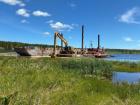
EPA Begins Cleanup Project at Torch Lake in Michigan’s Upper Peninsula
EPA has started a $12 million cleanup at the Lake Linden Recreation Area in Lake Linden, Michigan. Crews will remove about 13,300 cubic yards of sediment contaminated with lead, zinc, and polychlorinated biphenyls (PCBs).June 23, 2026
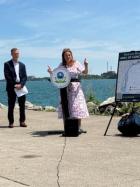
EPA and Partners Announce Projects to Clean Up Detroit Area Waterways
Multiple cleanups around Detroit, including Monguagon Creek, Harbortown and Lower Rouge River’s Old Channel, will help restore the Detroit and Rouge Rivers. EPA and partners have already addressed about 400,000 cubic yards of contaminated sediment and restored more than 320 acres of habitat within the Detroit River AOC.June 12, 2026

GLRI Funding Supports $1.6 Million in Grants to Benefit Communities and Habitat in Southeast Michigan
The grants, awarded through the National Fish and Wildlife Foundation’s Southeast Michigan Resilience Fund, will restore and reconnect streams and floodplains, expand tree canopy and improve access to natural areas. The grants will also leverage more than $1.6 million in matching contributions to generate a total conservation impact of more than $3.2 million.June 11, 2026
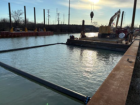
EPA Resumes Contaminated Sediment Cleanup in Detroit’s Lower Rouge River Old Channel
On March 30, U.S. Environmental Protection Agency resumed dredging contaminated sediment from the Lower Rouge River Old Channel in Detroit, Michigan. More than 100,000 cubic yards of sediment contaminated with coal tar and petroleum products will be remediated.April 2, 2026
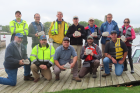
Increasing Habitat and Supporting Native Fish in Saginaw Bay
The Great Lakes Fishery Commission completed construction of a nearshore rock reef by Channel Island using GLRI funding provided by the National Oceanic and Atmospheric Administration’s Office of Habitat Conservation.February 3, 2026
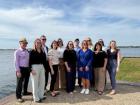
EPA and EGLE Celebrate Removal of Muskegon Lake Area of Concern from List of Most Environmentally Degraded Areas in the Great Lakes
In September, Muskegon Lake became the 8th overall U.S. AOC delisted and the 7th delisted under the GLRI. The designation comes after years of restoration and remediation work which restored more than 134 acres of habitat and 6,000 linear feet of shoreline.October 8, 2025
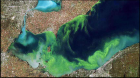
EPA Selects Four Recipients to Receive $3.7 Million in Grants to Assist Farmers with Nutrient Management in the Western Lake Erie Basin
The Nature Conservancy, Ohio Department of Agriculture, Lenawee County Soil and Water Conservation District, and Regents of the University of Michigan will receive $3,712,124 in grants funded under the Great Lakes Restoration Initiative. By providing technical assistance and outreach to farmers, these organizations will help reduce the amount of nutrient runoff entering Lake Erie resulting in harmful algal blooms.July 1, 2025